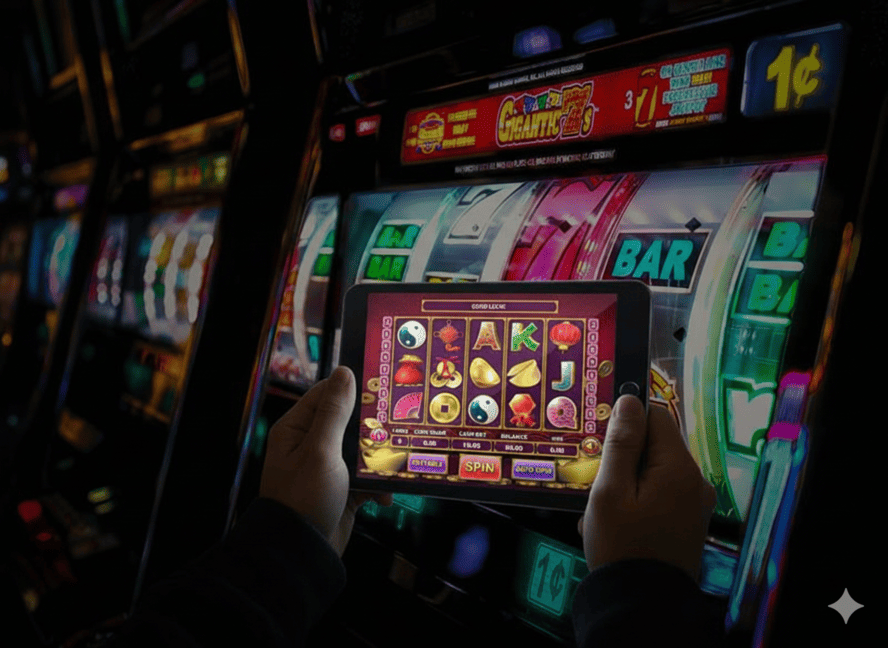
I stand at the precipice of the next great technological leap in the iGaming industry. For twenty years, we have been selling a two-dimensional experience. We have taken the vibrant, chaotic energy of a land-based casino floor and flattened it onto a glass screen. We have made it convenient, accessible, and fast. But we have always been missing a dimension. The screen has always been a barrier, a window you look through rather than a space you inhabit. Now, that window is dissolving. The technology that powered games like Pokémon GO and filled our social media feeds with dancing hotdogs has matured into a sophisticated platform for real-money gaming. I am talking about Augmented Reality (AR). As a technical director for a major online casino, I am no longer just managing servers and databases; I am architecting worlds. AR is not a gimmick. It is the bridge between the digital abstraction of an online bet and the physical reality of your living room. In this exploration, I will take you into our R&D labs to show you how this technology is currently being deployed, the incredible experiences it is enabling, and why, in the next five years, you will not just be playing the game-you will be living inside it.
The Spectrum of Reality: VR vs. AR
To understand AR’s potential, we must first distinguish it from its more famous cousin, Virtual Reality (VR).
Virtual Reality (VR): This is a total immersion. You put on a headset, and the real world disappears. You are in a completely digital environment. While VR casinos exist, they are a niche. Why? Because most people do not want to be completely blind to their surroundings for an extended period. It is isolating.
Augmented Reality (AR): This is an overlay. It uses your phone’s camera or a pair of transparent glasses to project digital objects into your physical space. You can still see your coffee table, your cat, and the TV. But now, there is a holographic roulette wheel spinning on top of that coffee table.
For the gambling industry, AR is the holy grail. It offers the immersion of VR without the isolation. It makes the game a part of your life, not a replacement for it.
The Technology Stack: How We Build the Illusion
Creating a stable, believable AR experience is a monumental technical challenge. It relies on a perfect symphony of hardware and software.
Hardware:
The primary vehicle for AR today is your smartphone. The LiDAR scanner in modern iPhones and the depth sensors in high-end Android devices are crucial. They allow the phone to “read” the geometry of your room in real-time. It knows where the floor is, where the walls are, and where the table is. This is what allows a digital slot machine to “sit” on your floor and not float in mid-air.
The next step, which we are heavily investing in for 2026 and beyond, is lightweight AR glasses (like the Meta Ray-Ban collaborations or Apple’s rumored future products). These will untether the experience from your hand, making it truly immersive.
Software:
We use development kits like Apple’s ARKit and Google’s ARCore. These toolkits provide the fundamental building blocks:
- Plane Detection: Finding flat surfaces.
- Light Estimation: Analyzing the ambient light in your room to make the digital object’s shadows look realistic.
- Occlusion: The ability for a digital object to be hidden behind a real object. This is key. If a virtual character walks behind your real couch, it adds a massive layer of realism.
The Applications: How We Are Using AR Today
While the “glasses” future is still on the horizon, we are already deploying AR in our mobile apps.
1. The AR Live Dealer
This is the most stunning application.
Imagine you launch a Live Blackjack game on your phone. Instead of watching a 2D video feed, you select “AR Mode.”
You point your camera at your dining table. The app scans the surface.
With a flash of light, a holographic, life-sized blackjack table appears on your real table. On the other side sits the live dealer, streamed in real-time from our studio.
You do not use a digital interface to bet. You use your hands. The camera tracks your finger. You “tap” on the virtual chips and “drag” them to the betting circle.
When you win, virtual coins erupt and fall onto your actual table, bouncing off the surface before disappearing.
The sense of “presence” is incredible. The dealer is in your house. The game feels tangible. This is made possible by combining our live video feed with volumetric capture data and real-time 3D rendering on your device.
2. The 3D Slot Machine in Your Living Room
This is the evolution of the slot game.
You can choose a slot from our lobby and “place” it in your room. A full-sized, realistic 3D model of the machine appears.
You can walk around it. You can look at the details.
To spin the reels, you don’t tap a button. You make a “pulling” motion with your hand in the air, mimicking the lever of a one-armed bandit. The camera’s motion tracking detects this gesture.
When the bonus round triggers, the machine might open up, and animated characters might jump out and run around your living room, interacting with your furniture.
3. AR Sports Betting
This is a game-changer for sports fans.
Imagine you are watching a football match on TV. You open our AR app.
You point your phone at the TV. The app uses computer vision to recognize the game.
It then overlays live odds directly onto the screen. You can see the odds for “Next Goalscorer” floating above the players’ heads.
To place a bet, you tap on a player. A betting slip appears in AR.
This “contextual betting” removes the need to look away from the action. It integrates the bet into the viewing experience.
The Role of 5G: The Unsung Hero
None of this is possible without a powerful network. AR is data-hungry.
Streaming a live dealer in volumetric 3D requires a massive amount of bandwidth.
The low latency of 5G is crucial for interactivity. When you tap a virtual chip, that command needs to go to our server and back in milliseconds. If there is a lag, the illusion is broken.
5G’s “network slicing” allows us to create a dedicated, high-priority lane for our AR data, ensuring a stable experience even in a crowded stadium.
The Psychology of Presence
Why invest millions in this? Because it changes the player’s brain.
When you play a 2D game, you are an observer.
When you play an AR game, you are a participant. Your brain accepts the virtual object as part of its spatial reality.
This increases “Cognitive Immersion.” You are less likely to be distracted by your surroundings because the game is your surroundings.
It also increases the “Endowment Effect.” When you can physically walk around a virtual slot machine in your own home, you feel a sense of ownership. It is your machine. This emotional connection is a powerful retention tool.
The Future: The Metaverse Casino
AR is the stepping stone to the “Metaverse.”
In the next decade, we will move from projecting a single table into your room to allowing you to walk into a full-scale virtual casino that is mapped onto a real-world space.
Imagine an empty warehouse. You put on AR glasses. Suddenly, the warehouse is the Bellagio. You can see the avatars of other players. You can walk up to a table, chat with the dealer, and sit down.
The cards are virtual, but the people are real.
This “Social AR” is the ultimate goal. It brings back the communal energy of a land-based casino without the need for a physical building.
Responsible Gambling in an Augmented World
I must address the ethical implications. If the casino is in your living room, where do you escape?
The lines between reality and the game blur. This presents new risks for problem gambling.
We are building new safety tools specifically for AR.
1. The “Fade Out”:
If our AI detects you are playing for too long, the virtual objects will start to become transparent. The dealer will literally fade away. This is a gentle but firm way of reminding you to return to the real world.
2. The AR Reality Check:
Instead of a text pop-up, a virtual host might appear in your room and say, “You’ve been playing for an hour. Would you like to see your session stats?” It makes the intervention personal and harder to dismiss.
3. Geo-Fencing and Age Verification:
AR apps use advanced GPS and world-mapping. We can create “No-Gambling Zones.” For example, we can block the app from working near a school or a therapy center. The LiDAR scanner can also be used for advanced age-gating, analyzing the user’s height and environment to flag potential underage players.
Conclusion: The New Dimension
Augmented Reality is not science fiction. It is the new frontier of user interface design, and the online casino industry is at the forefront of its adoption.
It solves the core problem of online gambling: the lack of physicality.
It makes the games more trustworthy by making them feel more real.
It makes the experience more social by bringing the dealer into your home.
And it makes the potential for immersion limitless.
So, the next time you open our casino app, look for the “AR Mode” button. Clear some space on your floor. And prepare to see the future. The game is no longer just in your hand; it is all around you. Welcome to the new reality.